


What Is Included in Closing Costs for a Home Purchase

Closing costs include lender fees, third-party service fees, title and settlement charges, government taxes, and prepaid items. Redfin puts the total at 2% to 5% of the purchase price, or $8,000 to $20,000 on a $400,000 home. The down payment is not part of that total, according to the Consumer Financial Protection Bureau (CFPB). Cash to close combines the two.
Key Takeaways
- Closing costs cover lender fees, third-party services, title charges, government fees, prepaid items, and initial escrow deposits.
- Buyers usually pay 2% to 5% of the purchase price, or $6,000 to $15,000 on a $300,000 home.
- The down payment is not a closing cost, and earnest money is credited toward cash to close.
- Florida adds mortgage stamps of 35 cents per $100 and intangible tax of 2 mills per dollar on financed loans.
- The Closing Disclosure arrives three business days before closing and lists every included fee.
What Is Included in Closing Costs for Buyers in a Home Purchase?
What is included in closing costs for buyer purchases falls into six groups, from lender fees to escrow deposits. The groups are lender fees, third-party services, title and settlement fees, government taxes, prepaid items, and initial escrow deposits. The CFPB says total closing costs exclude the down payment.
Buyers who want a clear view of each group can lean on our purchase transaction support before signing day. Each group has its own line section on the Closing Disclosure, which the next heading walks through.

What Items Are Considered Closing Costs on the Closing Disclosure?
Items considered closing costs appear in seven sections of the Closing Disclosure, according to the CFPB. Lenders must deliver that form three business days before closing. The graphic above lists the sections, and the numbered list below follows the form from top to bottom.
- Origination Charges: upfront charges from your lender for making the loan.
- Services Borrower Did Not Shop For: providers the lender picked, such as the appraisal.
- Services Borrower Did Shop For: providers you chose, which can include title services.
- Taxes and Other Government Fees: transfer costs and mortgage registration with the county records office.
- Prepaids: items such as interest from closing to the end of that month.
- Initial Escrow Payment at Closing: the opening balance of your escrow account.
- Other: costs for other services you have chosen.
The lender fees in section one deserve a closer look, since they set the tone for the rest of the form.
What Fees Are Included in Closing Costs From the Lender?
Lender fees included in closing costs are the origination charges. The CFPB describes them as upfront charges from your lender for making the loan. Examples are an application fee, a processing or underwriting fee, and a credit report fee. Discount points also appear here when a buyer pays for a lower rate.
Redfin says an application fee can run upwards of $500 and a credit report fee runs $10 to $100. Wells Fargo adds that courier costs run around $30. Lender fees vary by lender, so compare each Loan Estimate line by line. Outside providers add a second layer of charges.
What Third-Party Fees Are Included in Closing Costs?
Third-party fees included in closing costs are payments to outside providers who verify the home's value, condition, and ownership. These providers include the appraiser, the surveyor, the flood certification company, and the title agent who runs the title search.
The table below shows typical amounts from Redfin and Wells Fargo. Local prices vary, so treat each figure as a range.
| Fee | Who it pays | Typical amount | Source |
|---|---|---|---|
| Application fee | Lender | Upwards of $500 | Redfin |
| Credit report | Credit bureau | $10 to $100 | Redfin |
| Appraisal | Appraiser | $300 to $500 | Redfin |
| Flood certification | Certification company | $15 to $25 | Wells Fargo |
| Survey | Surveyor | $400 to $1,000 | Redfin |
| Title search | Title agent | Upwards of $200 | Redfin |
| Recording fees | County records office | Around $125 | Wells Fargo |
The table shows seven fees that fall under closing costs, and the survey carries the widest range. A property survey is one example of a service the title team can coordinate. Title charges deserve their own look next.
Is Title Insurance Included in Closing Costs?
Yes, title insurance is included in closing costs as a one-time premium paid at closing. A lender's policy protects the lender. An owner's policy protects the homeowner if someone sues over a claim from before the purchase, according to the CFPB.
Florida sets owner's policy premiums by rule. Florida Administrative Code 69O-186.003 charges $5.75 per $1,000 up to $100,000 and adds $5.00 per $1,000 from $100,000 to $1 million. A $400,000 owner's policy therefore costs $2,075. Our guide to the title policy explains what that premium buys.
Title insurance relies on a search of public records, which is why a title search fee also appears in the closing costs. Government fees are the next group.
Are Taxes Included in Closing Costs?
Yes, government taxes and recording fees are included in closing costs. The CFPB lists them under Taxes and Other Government Fees, covering transfer costs and mortgage registration with the county records office. In Florida, three charges stand out.
- Deed documentary stamp tax is 70 cents per $100 of consideration, under Section 201.02 of the Florida Statutes.
- Mortgage documentary stamp tax is 35 cents per $100 of the debt, under Section 201.08.
- Intangible tax is 2 mills per dollar on mortgage-secured notes, under Section 199.133.
On a $320,000 loan, mortgage stamps equal $1,120 and intangible tax equals $640. Deed stamps on a $400,000 price equal $2,800. The graphic below shows these Florida charges beside the owner's premium.

The purchase contract decides which party pays each tax. A pro-rated bill for property taxes can also land in the prepaid group.
Are Escrow Fees Included in Closing Costs?
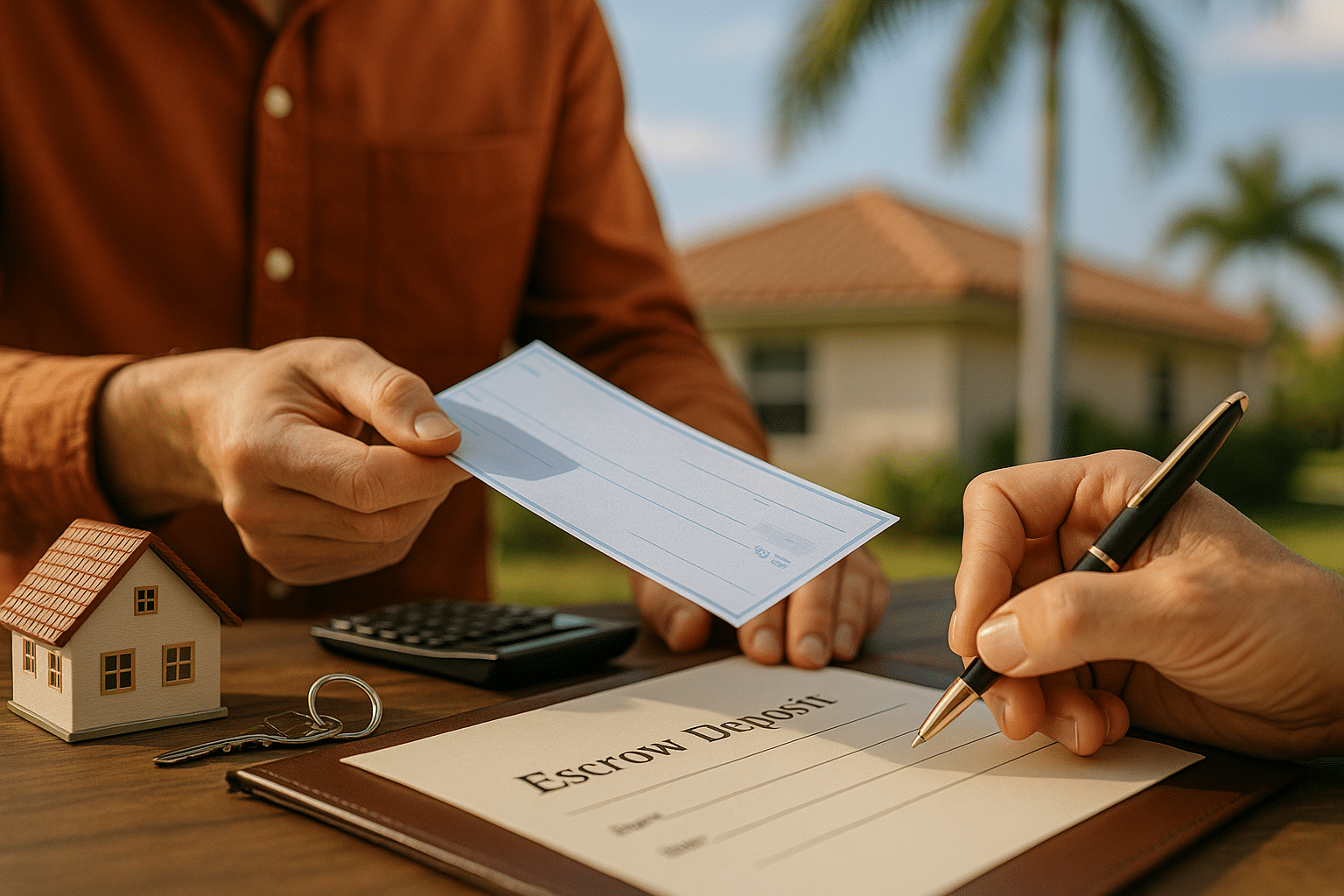
Yes, escrow or closing fees are included in closing costs. Wells Fargo says closing fees are paid to your escrow company or attorney for coordinating the transaction. This fee differs from the escrow account deposit, which sits in a separate section of the form.
The escrow agent holds funds and documents until every condition of the contract is met. Our comparison of escrow versus title work shows how the two roles divide the tasks. The escrow account deposit belongs with the prepaid items.
Are Prepaid Items Included in Closing Costs?
Yes, prepaid items are included in closing costs, even though they cover future expenses. The CFPB says Prepaids include interest on the loan from closing to the end of that month. A buyer may also prepay homeowners insurance and property taxes.
The Initial Escrow Payment at Closing is its own section. The CFPB says it sets the starting balance of your escrow account. Rocket Mortgage notes that prepaid taxes and insurance make up a sizable portion of the total. Buyers should also separate these costs from the down payment.
Is Down Payment Included in Closing Costs?
No, the down payment is not included in closing costs. The CFPB defines total closing costs as upfront costs of the loan and transaction, excluding your down payment. The two amounts combine only in the cash to close figure.
The CFPB defines cash to close as the actual amount you pay at closing. The graphic below shows a worked example on a $400,000 home with 20% down. Closing costs at 3% and earnest money at 2% are illustration values, not quotes. Buyers planning a buying a home budget can add their own figures.

The $80,000 down payment plus $12,000 in closing costs, minus an $8,000 earnest money deposit, leaves $84,000 due at closing. That example brings the earnest money deposit into view.
Is Earnest Money Included in Closing Costs?
No, earnest money is not a closing cost. Earnest money is a good-faith deposit that Redfin puts at about 1% to 3% of the home's price. The title or escrow agent holds it, and it counts as a credit toward your cash to close.
Wells Fargo says earnest money is typically subtracted from your down payment. Buyers can read how to handle the earnest money transfer safely before they send funds. Another payment made before closing is the home inspection.
Is Inspection Included in Closing Costs?
No, a home inspection is usually paid before closing, so buyers budget for it apart from the Closing Disclosure total. Farmers Insurance says a home inspection is usually optional but helps buyers understand the property's condition. The inspector bills the buyer directly.
The appraisal differs because the lender orders it, and its fee falls inside closing costs. Redfin puts appraisals at $300 to $500. The table below separates items included in closing costs from items paid outside them.
| Payment | Closing cost? | Where it appears |
|---|---|---|
| Origination charges | Yes | Closing Disclosure, origination section |
| Appraisal | Yes | Closing Disclosure, services section |
| Title insurance and title search | Yes | Closing Disclosure, services section |
| Taxes and recording fees | Yes | Closing Disclosure, government fees section |
| Prepaids and escrow deposit | Yes | Closing Disclosure, prepaid and escrow sections |
| Down payment | No | Added in cash to close |
| Earnest money | No | Credited toward cash to close |
| Home inspection | No, usually | Paid to the inspector before closing |
The table shows five included groups and three payments handled separately. Sellers and agents bring a different set of charges into the picture.
Are Realtor Fees Included in Closing Costs?
Yes, realtor commissions are a seller-side closing cost. Rocket Mortgage lists agent commissions, transfer taxes, and seller concessions among seller-side costs. Redfin gives the seller range of 1% to 3% of the sale price before agent compensation.
Wells Fargo says seller costs are typically deducted from sale proceeds, so sellers rarely bring cash to the table. Buyers should ask their real estate agents how the purchase contract assigns any buyer-agent fee. Attorney charges raise a similar question.
Are Attorney Fees Included in Closing Costs?
Yes, attorney fees are included in closing costs when a buyer or seller hires one to handle the transaction. Wells Fargo says attorney fees may be required depending on your state, and they vary. Hiring an attorney is a separate decision from paying the title agent.
Buyers who use an attorney see that fee on the Closing Disclosure in the services or Other section. The title agent and the attorney can work together on the same closing, and our buyer closing services follow that same model. The remaining question is whether a buyer can finance any of these costs.
Can Closing Costs Be Included in a Mortgage?
Closing costs can be included in a mortgage in some loan programs, but not as a standard feature of every purchase loan. Wells Fargo says no closing cost loans roll closing costs into your total loan amount. That may create a higher interest rate.
Fannie Mae allows a limited cash-out refinance to finance closing costs, points, and prepaid items. A buyer can also ask the seller to cover costs. FHA permits an interested party contribution of up to 6% of the sales price. Your lender explains which options fit your refinance loans or purchase. Every option changes the loan balance, so review it with your lender.
What Else Should You Know About Closing Cost Line Items?
What Is Included in Closing Costs for Seller Transactions?
Seller closing costs include agent commission, transfer taxes, prorated property taxes, HOA fees, and any seller concessions. Redfin puts them at 1% to 3% of the sale price before agent compensation. Sellers also pay off an existing mortgage from the proceeds.
Who Pays Most of the Closing Costs?
Wells Fargo says buyers pay mostly lender-related fees, while sellers cover costs tied to the home. The purchase contract decides final responsibility. Florida purchase contracts assign deed stamps and the owner's policy by agreement, so read the contract carefully. Our guide on who pays premiums in Florida covers that custom.
What Is Included in Closing Costs for a Refinance?
Refinance closing costs include lender fees, an appraisal, a title search, and a lender's title policy. Recording fees and Florida stamps and intangible tax on the new loan also apply. A refinance has no down payment.
Can You Estimate Closing Costs Before You Apply?
Yes, buyers can estimate closing costs before applying. A free closing cost estimate tool gives a starting figure for title charges, and the lender's Loan Estimate gives the rest. The Closing Disclosure confirms final numbers three business days before closing.
Frequently Asked Questions
What Are Typical Closing Costs on a $400,000 House?
Typical closing costs on a $400,000 house run $8,000 to $20,000, based on Redfin's 2% to 5% range. A $300,000 home runs $6,000 to $15,000. Final amounts depend on the lender, the loan, and the contract terms.
What Is the Most Expensive Part of Closing Costs?
Rocket Mortgage says prepaid property taxes and homeowners insurance make up a sizable portion of the total. Government taxes and the owner's title premium also add thousands of dollars in Florida. Each home produces a different mix.
How Large Can an Escrow Cushion Be at Closing?
An escrow cushion can be no greater than one-sixth of estimated annual disbursements, under 12 CFR 1024.17. The cushion is an extra balance the lender holds in the escrow account. The escrow deposit appears as a prepaid line on the Closing Disclosure.
Is the Appraisal Included in Closing Costs?
Yes, the appraisal fee is included in closing costs. Redfin puts appraisals at $300 to $500. The lender orders the appraisal, and the buyer pays for it at or before closing.
Are Closing Costs Negotiable?
Some closing costs are negotiable, according to Farmers Insurance, which says buyers may reduce costs by shopping around. Title and settlement services are an area where buyers can compare prices.
When Do You Find Out Which Costs Are Included?
The lender sends a Loan Estimate after application and a Closing Disclosure at least three business days before closing. The Closing Disclosure shows every included fee and the final cash to close.
How Does Liberty Title Help Buyers Review What Is Included in Closing Costs?
Liberty Title helps buyers see what is included in closing costs by explaining each title, escrow, and recording line before closing day. Our team works with buyers, sellers, realtors, and lenders in both English and Spanish. A buyer can call +1 (305) 530-8998 to review the Closing Disclosure with an escrow officer.
The Liberty Title firm is an ALTA member certified to ALTA Best Practices. General information here does not replace advice from your title agent, real estate attorney, lender, or tax advisor.


You May Also Like

How to Calculate Closing Costs Before You Close

What Is Included in Closing Costs for a Home Purchase

Who Pays Closing Costs in a Real Estate Transaction

Are There Closing Costs on a Home Equity Loan

Can You Roll Closing Costs into a Mortgage

Do Sellers Pay Closing Costs and How Much

What a Warranty Deed Is and How It Protects the Buyer

How Much Closing Costs Are and What They Include

























How Long to Close After Title Search for Homebuyers

How To Safely Wire Money to a Title Company

What Documents Does a Title Company Need

How Much a Title Company Charges and What You Get

How Long a Title Company Can Hold Funds After Closing

How To Do a Title Search on Property Yourself

Title Insurance in Real Estate and How It Protects You
How Long a Title Search Takes and What Causes Delays
How a Title Search Works and What It Reveals

What a Title Company Does and Why It Matters at Closing

What Is Title Insurance and Why Do You Need It