%204%20(5).avif)
%204%20(6).avif)
.png)
.avif)
.avif)
.avif)
.avif)
.avif)


.avif)
Do You Need Title Insurance for New Construction Homes
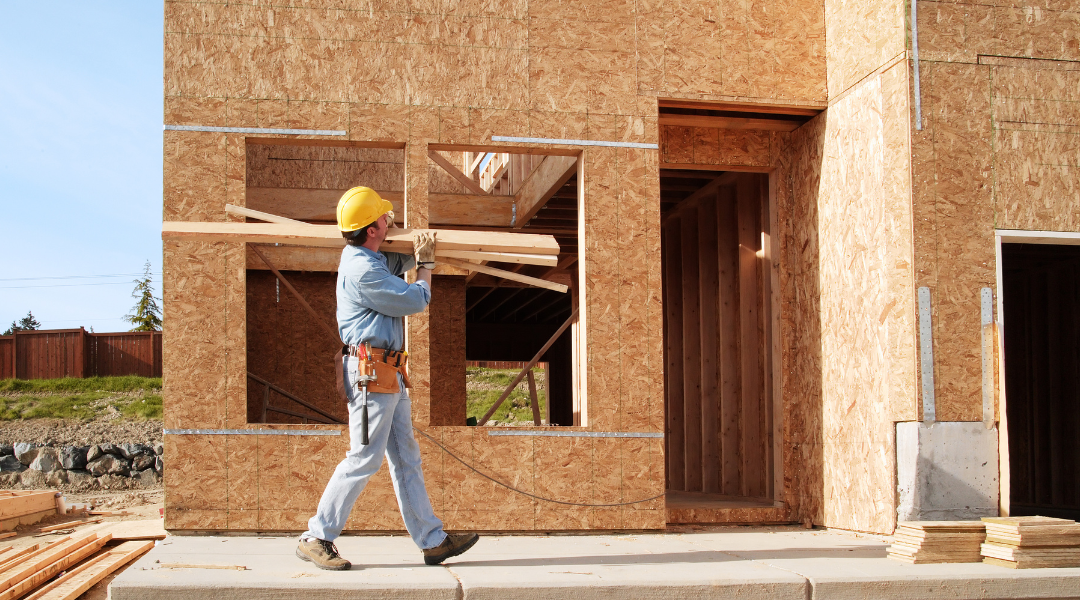
Yes, you need title insurance for a new construction home. The house is new. The land under it is not, and the land carries every deed, easement, lien, and recording error filed against it going back decades. New construction also adds a second risk that resale homes do not have, because the contractors and suppliers who built the house can record a claim against the property after you close. This article covers where both risks come from, how Florida's construction lien law lets a claim filed after closing outrank the deed you already recorded, what the builder's title work does and does not do for you, and what protects you at each stage of the build.
Do You Need Title Insurance for New Construction Homes?
You need title insurance for new construction homes for the same reason you need it on a resale home, plus one more. Owner's title insurance covers the land and your legal ownership of it, not the building, so a brand new structure does nothing to reduce the risk the policy is written against.
Buyers skip it because the logic feels sound. No previous owner lived here, so no previous owner left a problem behind. That reasoning applies to the house and stops at the foundation.
The parcel itself was owned before you, probably several times. It was farmland or scrub or part of a larger tract, then it was assembled by a developer, then platted, then subdivided into the lot you are buying. Each of those transfers was recorded, and each recording is a place where an error, a lien, or an unresolved claim can sit. Owner's title insurance is the only thing standing between you and that history.
Why Does a New Home Still Have Title Risk?
A new home still has title risk because two separate sources feed it. The land carries a recorded history that predates the house, and the construction process creates fresh claims that can surface after you own it.
The land history is the risk every property carries. Prior owners, unpaid taxes, an old mortgage that was satisfied but never released, an inherited parcel with a missing heir, a survey that placed a boundary six feet off. Research from the American Land Title Association found that 36 percent of all transactions require extensive, nonroutine title clearance work before closing, and a new subdivision lot is not exempt from that figure.
The construction risk is the one unique to new builds. Dozens of businesses supplied labor and materials to that lot before you ever saw it. Each of them has a statutory right to claim against the property if they were not paid, and that right does not disappear when the deed transfers to you. Handling both risk categories in a single file is routine work on residential closings, though it takes more digging on a new build than most buyers expect.
What Does a Title Search Find on a New Construction Lot?
A title search on a new construction lot finds the full recorded history of the land plus every document the developer filed to create the subdivision. The search traces ownership back decades even though the house is months old.
Here is what the examiner pulls on a typical new build:
- The chain of title on the raw land, including every deed back to a root of title document
- The recorded plat, which establishes the lot lines, the block, and the dedicated streets
- The declaration of covenants, conditions, and restrictions that creates the homeowners association and binds your lot to it
- Utility, drainage, and access easements the developer reserved across individual lots
- Any community development district assessment recorded against the parcel
- The developer's acquisition and construction mortgages, and whether each has been released as to your lot
- Unpaid property taxes or tax certificates from the years the land sat undeveloped
- The notice of commencement and any construction liens already recorded against the property
Volume is the reason this takes real work. The American Land Title Association found that more than 80 percent of purchase transactions require reviewing at least 11 documents, that 21 percent involve more than 50 records tied to a property's ownership history, and that professionals rely on at least 9 different document sources in half of all transactions. A subdivision lot frequently lands in the upper end of those ranges, because the developer's paperwork sits on top of the land's own history. A thorough title search pulls all of it rather than stopping at the plat.
What Is a Construction Lien in Florida?
A construction lien in Florida is a recorded claim against real property filed by someone who supplied labor, services, or materials to improve that property and was not paid. Florida law calls it a construction lien, and other states call the same instrument a mechanics lien or a contractor's lien.
The claim attaches to the property itself rather than to the person who owes the money. That distinction is the whole problem for a new construction buyer. If the builder failed to pay a subcontractor, the subcontractor's remedy runs against the land, and the land is now yours.
Chapter 713 of the Florida Statutes governs the process. The people who can record a claim under it include:
- The general contractor who built the house
- Subcontractors, including framers, electricians, plumbers, roofers, and concrete crews
- Sub-subcontractors hired by those subcontractors
- Material suppliers who delivered lumber, fixtures, windows, or appliances to the site
- Laborers who worked on the property
- Licensed design professionals such as architects, engineers, surveyors, and landscape architects
A single house involves a long list of these parties, and the buyer never meets most of them. A payment dispute between a builder and one electrical subcontractor can produce liens on every home in the community that subcontractor wired.
Can a Contractor File a Lien After You Close?
Yes, a contractor can file a lien after you close. Section 713.08(5) of the Florida Statutes allows a claim of lien to be recorded at any time during the progress of the work or afterward, but not later than 90 days after the lienor's final furnishing of labor, services, or materials.
Ninety days from final furnishing is the deadline, and final furnishing is not the same date as your closing. A supplier who delivered the last of the tile three weeks before your walkthrough has 90 days from that delivery. If your closing happened four weeks after the delivery, roughly two months of that window remain open after you hold the keys.
Nothing about that lien appears in a title search performed before it is recorded. The search examines what is in the public record on the day it runs. A claim recorded six weeks later is invisible to it, which is why the timing of the search is not the protection people assume it is. New home construction runs at high volume across Miami-Dade and the surrounding counties, and every one of those files carries the same open window.
How Can a Lien Filed After Closing Take Priority Over Your Deed?
A lien filed after closing takes priority over your deed through a rule called relation back. Under Section 713.07(2), construction liens attach and take priority as of the time the notice of commencement was recorded, not as of the date the lien itself is recorded.
Work through the sequence and the exposure becomes clear. The builder records a notice of commencement in January, before the first shovel breaks ground. You close and record your deed in October. A roofing supplier records a claim of lien in December. That December lien relates back to January, which is nine months before your deed existed, so it sits ahead of you in line.
The statute is explicit about the consequence. Liens have priority over any conveyance or encumbrance that was not recorded before the lien attached. A conveyance means a deed. Your deed. Lenders face the same exposure, which is why a construction lien recorded months after a mortgage can outrank that mortgage and put the loan at risk in a foreclosure action.
What Is a Notice of Commencement?
A notice of commencement is a document recorded in the county records before construction begins, stating who owns the property, who the contractor is, and what improvement is planned. Section 713.13 of the Florida Statutes sets its required form and contents, and its recording date becomes the priority date for every construction lien on the project.
That single date does the damage. Absent a recorded notice of commencement, liens attach as of the date each claim of lien is recorded, which would place your October deed ahead of a December lien. With one recorded in January, the order reverses.
Buyers rarely know the document exists. It is recorded by the owner of the land at the time, which on a builder-developed lot is the builder, months or years before your name enters the transaction. Asking for the recorded notice of commencement and its date is a reasonable request, and the answer tells your closing agent exactly how far back the exposure reaches.
How Does Title Insurance Protect Against Construction Liens?
Title insurance protects against construction liens in two ways, and the first one matters more than the second. The pre-closing work clears the lien exposure before you own the property, and the policy covers you if something clears the search and surfaces anyway.
The pre-closing work is the real defense. Before a new construction file closes, the closing agent collects a final contractor's affidavit and lien waivers. Section 713.06(3)(d) requires the contractor to furnish that final affidavit before the owner disburses final payment, and the affidavit states under oath who has been paid and who has not. Each unpaid party named on it gets resolved before the money moves.
Lien waivers back the affidavit up. Every subcontractor and supplier of consequence signs a release confirming payment in full through a stated date. A file with a complete waiver package has closed the door on most of the 90-day window before the buyer ever signs. Among companies performing this kind of clearance work, 62 percent typically handle at least four curative actions per transaction, and a new build with a dozen trades on it sits well above that average. The title company running that collection is doing the work that keeps a lien from ever being filed.
The policy is the backstop for what escapes. A construction lien that was already recorded and missed in the search, an unreleased developer mortgage, a recording error, a defective legal description, a forged instrument in the chain: the owner's policy pays the loss and pays the legal cost of defending your ownership. An analysis by First American estimated that the curative work performed across the title industry mitigates 600 to 900 billion dollars in annual risk exposure to buyers and lenders.
Does the Builder's Title Work Protect You?
The builder's title work protects the builder, not you. A builder confirms it holds clear title to the lot so it can convey and get paid, and that examination ends at the builder's own interest.
Builders manage permits, inspections, certificates of occupancy, and their own lien exposure to their lender. None of that is a promise to you about your ownership rights after closing. The certificate of occupancy says the house is safe to live in. It says nothing about who has a recorded claim against the dirt.
A builder's warranty covers the same gap in the other direction. It covers workmanship and materials for a stated period. It does not cover a supplier's lien, an easement nobody disclosed, or a defect in the chain of title, because those are ownership questions rather than construction questions.
Do You Have to Use the Builder's Title Company?
No, you do not have to use the builder's title company. Builders commonly own or partly own an affiliated title company, and federal regulation permits the referral only if the builder discloses the relationship in writing and does not require you to use it.
Regulation X sets the conditions. The affiliated business arrangement disclosure must come before the referral, must state the ownership relationship and an estimated range of charges, and must tell you plainly that you are free to select any provider you choose. You sign it to acknowledge receipt, which is why it usually arrives buried in a stack of initial paperwork.
Read it rather than initialing past it. Builders frequently attach an incentive to using the affiliated company, and accepting that incentive is a legitimate choice. Declining it is equally legitimate, and the question of who picks the closing agent on a new build is worth settling before you sign the builder's contract rather than after.
Is Lender's Title Insurance Enough for a New Home?
No, lender's title insurance is not enough for a new home. The lender's policy insures the lender's mortgage, pays the lender, and shrinks as you pay the loan down, which leaves your equity uninsured from the first payment forward.
Buyers assume they are covered because they paid for the lender's policy at closing. They did pay for it. It protects someone else. If a construction lien wipes out your ownership, the lender's policy makes the lender whole and leaves you with the loss and the loan.
An owner's policy works the opposite way. It is a one-time premium paid at closing, it covers the full purchase price rather than the loan balance, and it stays in force for as long as you or your heirs hold the property. There are no renewals and no monthly premium.
What Happens If You Don't Get Title Insurance?
If you don't get title insurance, you pay for every title problem yourself, including the legal fees to fight it. The claim comes to you as the current owner, and no other party in the transaction is obligated to defend you.
The table below shows how the two policies line up against the risks a new construction buyer actually faces.
Risk on a New Construction HomeLender's Policy ProtectsOwner's Policy ProtectsWho Pays With No Owner's PolicyConstruction lien relating back to the notice of commencementThe lender onlyYou, up to the policy amountYouUnpaid property taxes from the years the land sat undevelopedThe lender onlyYouYouDeveloper mortgage never released as to your lotThe lender onlyYouYouUndisclosed easement across the lotThe lender onlyYouYouRecording error or defective legal descriptionThe lender onlyYouYouForged or fraudulent instrument in the chain of titleThe lender onlyYouYouLegal fees to defend your ownership against any of the aboveThe lender's defense onlyYour defense, in addition to the lossYouConstruction defects in the house itselfNeither policyNeither policyBuilder's warranty, not title insurance
Sources: Florida Statutes Chapter 713, construction lien priority and recording deadlines; standard ALTA owner's and loan policy coverage; Florida Statutes 627.782(1), title insurance rate promulgation. Coverage depends on the specific policy issued and its stated exceptions.
The last row is the one buyers get wrong most often. Title insurance covers your ownership of the property. It does not cover a leaking roof or a cracked slab, and no title policy ever has. The list of purchase closings documents you sign includes both instruments, and they answer different questions.
Do You Need Title Insurance If You Have No Mortgage?
You need title insurance more if you have no mortgage, not less. Paying cash removes the lender's requirement for a title policy, which removes the only party in the transaction who was going to insist on a title examination at all.
A financed buyer gets a search and a lender's policy whether they think about it or not, because the lender requires both. A cash buyer gets neither by default. Skipping the examination on a cash purchase means nobody has confirmed the developer's mortgage was released, nobody has collected lien waivers, and nobody has checked the plat against the deed.
Cash purchases are common enough here to make this a live question rather than an edge case. Redfin reported that 38.1 percent of home purchases in the Miami metro area were made in cash in 2024, a share well above the national figure. A cash buyer also has more exposed capital in the property than a financed buyer, since the entire purchase price is their own money.
Is Title Insurance a Waste?
No, title insurance is not a waste. It is the only instrument in a real estate transaction that pays your legal defense costs on an ownership claim, and legal defense is usually the larger expense.
The objection is that claims are rare and the premium buys nothing most of the time. Both halves of that are fair. Claims are uncommon precisely because the industry does the curative work up front, and the American Land Title Association found that a standard file takes about 22 hours of professional labor while a difficult file takes 45 hours. Most of the value is delivered before the policy is ever issued.
What separates it from other insurance is the payment structure. There is one premium, paid once at closing, and the coverage lasts as long as you or your heirs own the property. Florida also sets title insurance premium rates by rule under Section 627.782(1) of the Florida Statutes, so the premium is the same regardless of which company issues the policy. Shopping the premium accomplishes nothing. Choosing a company that does the pre-closing work properly accomplishes a great deal.
What Is the Best Way to Protect the Title of Your Home?
The best way to protect the title of your home is to combine a thorough examination before closing with an owner's policy that stays in force afterward. On a new construction purchase, take these steps in this order.
- Choose your own closing agent before you sign the builder's contract. The builder's contract names a closing agent, and changing it afterward requires an amendment both sides have to sign.
- Ask for the recorded notice of commencement and its date. That date sets the priority reach of every construction lien on the project, and your closing agent needs it to size the exposure.
- Confirm the closing agent is collecting a final contractor's affidavit. Florida law requires the contractor to furnish it before final payment, and it names every party still owed money.
- Ask for the lien waiver package. Signed releases from the subcontractors and suppliers of consequence close most of the 90-day window before you sign anything.
- Verify the developer's mortgage was released as to your specific lot. A partial release covering other lots is not a release covering yours. The 2026 ALTA study found that 59 percent of title professionals name securing prior mortgage releases the single hardest part of curative work.
- Read the title commitment when it arrives, especially the exceptions. Exceptions are the items the policy will not cover, and easements and plat restrictions on a new subdivision lot commonly appear there.
- Get a current survey. A survey catches a garage sited over a lot line or a driveway crossing a utility easement while it is still the builder's problem to fix.
- Check the credentials of whoever holds your money. Confirm the agent is a licensed Florida title agent, is authorized by a title underwriter, and is certified to ALTA Best Practices, which covers escrow controls and data security.
- Buy the owner's policy at closing. It cannot be added later at the same terms, and the closing table is the only moment the one-time premium applies.
Steps two through five are the ones that separate a new construction file from a resale file. Everything else on the list applies to any purchase. Assembling the closing documents for a new build simply means chasing more parties for more releases than a resale ever requires.
When Should You Get Title Insurance During Construction?
You should get title insurance at closing in most new construction purchases, and before construction begins in one specific case. The right timing depends on who owns the land while the house is being built.
Three structures cover nearly every situation. In a builder-financed community, the builder owns the lot throughout construction and conveys the finished home to you, so the policy issues at closing and covers both the land and the completed house. In a custom build on land you already own, you should insure the land at the time you buy the lot, because you are the owner of record while the liens are accruing. In a phased development, confirm that the title work is updated as each phase records, since the plat and the easements can change between phases.
Ordering the title work early matters in all three. A new construction file has more parties to chase than a resale, so starting the examination when the contract goes effective rather than three weeks before closing protects the closing timeline. Builder closing dates move with the certificate of occupancy, and a file that is ready early absorbs that movement without drama.
Should You Get Owner's Title Insurance on a New Home?
You should get owner's title insurance on a new home, and the construction lien exposure alone justifies it. No other protection in the transaction covers a claim that attaches to your property before your deed exists.
Weigh it against what you are actually buying. The premium is paid once. The coverage runs for as long as you or your heirs hold the property. It pays both the loss and the cost of defending your ownership, and legal defense on a contested claim frequently exceeds the claim itself.
The decision is easiest to make at the front of the transaction, when you can still choose the closing agent and set the terms. Buyers who wait until the closing package arrives are deciding under time pressure with the builder's preferred provider already in place. The simplest move is to order title as soon as the contract is signed.
Three adjacent situations come up often enough to address, because the same logic applies with different facts.
Do You Need Owner's Title Insurance for a New Condo?
You need owner's title insurance for a new condo for the same reasons as a new single-family home, plus the association layer. A condominium unit carries everything a new build carries and adds a recorded declaration, shared common elements, and an association with its own claims.
The declaration of condominium creates the unit as a legal parcel and defines what you own against what the association controls. Errors in that document, in the unit's legal description, or in the percentage of common element ownership assigned to it are title problems rather than construction problems.
Association charges are the other layer. The 2026 ALTA study found that association dues and transfer fees appear in nearly 57 percent of transactions, and Florida law gives an association 10 business days to issue the estoppel certificate stating what is owed. Developer-controlled associations in a newly turned-over building are frequently the slowest party in the file.
Do You Need Owner's Title Insurance for a Refinance?
You do not need a new owner's title insurance policy for a refinance, because the policy you bought at purchase stays in force. A refinance requires a new lender's policy, since the old one ended when the original loan was paid off.
The distinction confuses borrowers regularly. Your owner's policy is tied to your ownership, not to any loan, and refinancing does not disturb it. The lender's policy is tied to the specific mortgage, so a new mortgage needs new coverage.
One thing worth asking for: a prior owner's policy on the same property can qualify the new lender's policy for a reissue rate, which lowers the premium. The reissue rate is not applied automatically. You have to supply proof of the prior policy, and a closing agent who asks you for it before you think to offer it is paying attention. That habit is part of the closing services a borrower should expect on any refinance.
Frequently Asked Questions
Do I Really Need Home Title Insurance?
You really need home title insurance if you want your ownership defended at someone else's expense. A lender will require a lender's policy on any mortgage, and that policy protects the lender rather than you. The owner's policy is the one that covers your equity, pays your legal defense costs, and lasts as long as you or your heirs own the property.
Does Title Insurance Cover Construction Defects?
Title insurance does not cover construction defects. It covers your legal ownership of the property, meaning liens, easements, recording errors, boundary problems, and competing claims. A leaking roof, faulty wiring, or a settling foundation falls under the builder's warranty and any applicable Florida construction defect remedies, not under any title policy.
Does a Builder's Warranty Replace Title Insurance?
A builder's warranty does not replace title insurance. The warranty covers workmanship and materials for a stated period and then expires. Title insurance covers ownership and lasts as long as you hold the property. A new construction buyer needs both, because a warranty claim and a title claim arise from entirely different facts.
How Long Does Owner's Title Insurance Last?
Owner's title insurance lasts as long as you or your heirs hold an interest in the property. There is one premium, paid once at closing, with no renewals and no monthly payments. The policy also continues to protect you after you sell, against claims arising from the period you owned the property, because you gave warranties of title in your own deed.
What Is a Lien Waiver?
A lien waiver is a signed document in which a contractor, subcontractor, or supplier gives up the right to record a construction lien for work already paid for. Waivers can be partial, covering payment through a stated date, or final, covering the entire job. On a new construction closing, the waiver package is the primary evidence that the 90-day lien window has been closed off before the buyer takes title.
Is Title Insurance Required for New Construction?
A lender's title policy is required on any new construction purchase financed with a mortgage, and an owner's policy is optional in every case. Optional is not the same as unnecessary. The lender requires coverage because the lender has money at risk, and the buyer has more money at risk than the lender does on most purchases.
The Bottom Line
A new house sits on old land, and the land is what a title policy insures. Every deed, easement, unpaid tax, plat restriction, and unreleased developer mortgage in that parcel's history transfers to you along with the keys. On top of that history, the build itself creates a window that stays open after your closing, because a Florida contractor or supplier can record a claim of lien up to 90 days after their final work, and that claim relates back to a notice of commencement recorded long before your deed existed.
Neither the builder's title work nor the lender's policy answers that exposure for you. The builder confirmed its own ownership so it could convey. The lender insured its own mortgage. An owner's policy is the only instrument in the transaction written in your name, and the pre-closing work behind it, the contractor's final affidavit, the lien waivers, the release verification, is what keeps a claim from ever reaching you. The premium is set by the state, so the only variable worth shopping is the quality of that work.
We handle new construction, resale, condominium, and refinance closings for buyers, sellers, realtors, and lenders, in English and Spanish, and we are glad to walk through the notice of commencement date and the lien waiver package on your specific build before you commit to anything. Liberty Title can tell you plainly what your exposure looks like and what closes it.
Reach us any weekday, or contact us and we will get back to you the same day.
.avif)
.avif)
.avif)
.avif)
You May Also Like



















How Long to Close After Title Search for Homebuyers
.avif)

How To Safely Wire Money to a Title Company

What Documents Does a Title Company Need

How Much a Title Company Charges and What You Get

How Long a Title Company Can Hold Funds After Closing

How To Do a Title Search on Property Yourself

Title Insurance in Real Estate and How It Protects You

How Long a Title Search Takes and What Causes Delays
How a Title Search Works and What It Reveals

What a Title Company Does and Why It Matters at Closing

What Is Title Insurance and Why Do You Need It








%201%20(5).avif)
%201%20(6).avif)