%204%20(5).avif)
%204%20(6).avif)
.png)
.avif)
.avif)
.avif)
.avif)
.avif)


.avif)
Who Pays for Owner's Title Insurance in Florida
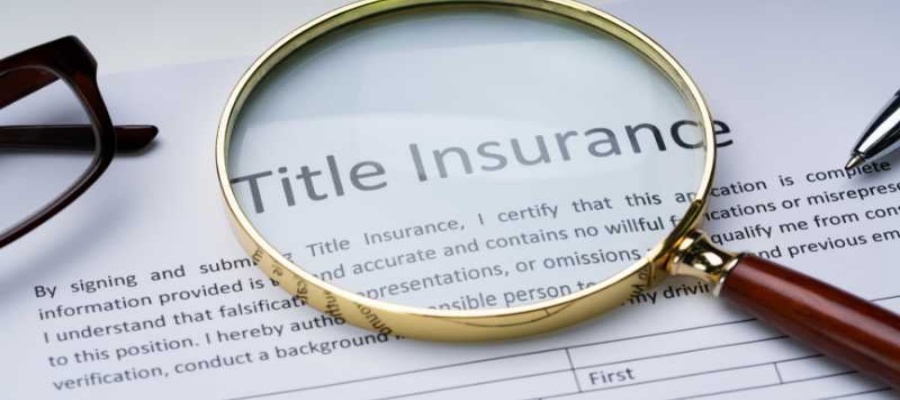
In Florida, who pays for owner's title insurance depends on local county custom and what the buyer and seller agree to in the purchase contract. Florida law does not require one party or the other to cover the cost. In most Florida counties, the seller customarily pays for the owner's title insurance policy. In a few counties, including Miami-Dade, Broward, Sarasota, and Collier, the buyer typically pays instead. The purchase contract controls the final decision, and the cost is always negotiable between both parties. This article explains which counties follow which custom, how the FAR/BAR contract assigns responsibility, what owner's title insurance costs, what it covers, and how to negotiate this expense during your next real estate transaction.
Who Pays for Owner's Title Insurance in Florida by County
Who pays for owner's title insurance in Florida varies by county, with the seller paying in the majority of Florida's 67 counties and the buyer paying in a handful of South Florida and Gulf Coast counties. This county-by-county split is not a law. It is a long-standing local custom that real estate agents, attorneys, and title companies follow as the default starting point for every transaction. The custom developed over decades of practice in each county's real estate market, and it became the expected norm that both sides plan around when budgeting for closing costs.
The party who pays for the owner's title insurance policy also typically gets to choose the title company that handles the closing. That connection between payment and title company selection gives the paying party control over which company coordinates the transaction, sets the settlement fee, and manages the title search. The table below shows the custom for Florida's most active real estate counties.
Florida CountyWho Pays for Owner's PolicyWho Chooses the Title CompanyMiami-DadeBuyer paysBuyer choosesBrowardBuyer paysBuyer choosesSarasotaBuyer paysBuyer choosesCollier (Naples)Buyer paysBuyer choosesPalm BeachSeller paysSeller choosesHillsborough (Tampa)Seller paysSeller choosesPinellas (St. Pete)Seller paysSeller choosesOrange (Orlando)Seller paysSeller choosesDuval (Jacksonville)Seller paysSeller choosesLee (Fort Myers)Seller paysSeller choosesOsceolaSeller paysSeller choosesManateeSeller paysSeller chooses
Buyers and sellers relocating between Florida counties are often caught off guard by the shift in custom. A buyer moving from Orlando, where the seller's responsibility is the norm, to Miami-Dade may not expect to pay for the owner's policy. That surprise can create friction at the closing table, which is why confirming the custom early in the contract process matters so much.
Regardless of county custom, the buyer almost always pays for the lender's title insurance policy statewide. The lender's policy protects the mortgage lender's financial interest, and most lenders require it as a condition of loan approval. The owner's title insurance policy is the one that varies by county, and it protects the buyer's equity in the property.
How Does the FAR/BAR Contract Determine Who Pays
The FAR/BAR contract determines who pays for owner's title insurance through specific checkboxes in Paragraph 9 that designate which party covers the owner's policy and charges and which party selects the closing agent. The Florida Realtors/Florida Bar residential contract, commonly called the FAR/BAR contract, is the standard purchase agreement used in most Florida residential transactions. Paragraph 9 of this contract is the section that controls the financial assignment of title insurance costs.
The "Owner's Policy and Charges" designation in Paragraph 9 covers more than just the title insurance premium. It includes the cost of the owner's title insurance policy, the municipal lien search, the closing agent's settlement fee, and the title search fee. According to Berlin Patten Ebling, a Florida real estate law firm, Paragraphs 9(c)(i), 9(c)(ii), and 9(c)(iii) outline who picks the closing agent and who pays for these combined charges. When a contract says "seller pays for owner's policy," it typically means the seller covers that entire bundle of costs.
The contract requires both parties to agree on these terms before signing. Leaving the checkboxes blank or unclear creates confusion that can delay closing or trigger disputes between the buyer and seller. Real estate agents and attorneys in Florida routinely confirm these designations early in the contract process to prevent last-minute problems. We see this in our own residential closings regularly, and clear contract language is one of the simplest ways to keep a transaction on schedule.
Who Chooses the Title Company in Florida
The party who pays for the owner's title insurance policy typically chooses the title company in Florida. This connection between payment and selection is a practical default, not a legal requirement. It works on a straightforward principle: the party bearing the cost has the strongest interest in choosing the provider that handles the work.
In seller-pays counties like Palm Beach, Hillsborough, and Orange, the seller selects the title company. In buyer-pays counties like Miami-Dade and Broward, the buyer selects the title company. The selected title company coordinates the entire closing, from the title search through document preparation and final settlement. That company also sets ancillary fees like the settlement charge, lien search cost, and document preparation fees. While the title insurance premium itself is the same at every Florida title company because rates are regulated by the state, these service fees can vary. Choosing a title company with transparent pricing, fast turnaround, and strong communication makes a measurable difference in how smoothly the closing runs.
The FAR/BAR contract allows the parties to override the default custom. A buyer in a seller-pays county can offer to cover the owner's policy in exchange for choosing a title company they trust. A seller in a buyer-pays county can agree to absorb the cost as a concession to attract a stronger offer. Every arrangement is possible as long as both sides agree in writing.
Can You Negotiate Who Pays for Title Insurance in Florida
Yes, you can negotiate who pays for title insurance in Florida because county custom is a starting point, not a binding rule. Nothing in the Florida Statutes dictates which party must pay for title insurance. The responsibility is assigned entirely through the purchase contract, and every term of that contract is negotiable between the buyer and seller. Market conditions, the strength of the offer, and the motivations of each party all influence who ends up covering this cost.
In a seller's market, buyers may offer to pay for the owner's title insurance to make their offer more competitive, even in a county where the seller customarily pays. In a buyer's market, sellers may agree to cover the cost as a closing incentive. According to Redfin, the median Florida home spent 70 days on the market in June 2026, up from prior years, which suggests a more balanced market where both sides have room to negotiate. The Florida single-family median home price reached $425,000 in July 2026, according to Florida Realtors data, which means the owner's title insurance premium on a typical transaction runs approximately $2,200. That amount is large enough to matter in a negotiation but small enough to serve as an effective bargaining chip.
Buyers looking at residential purchases in South Florida should plan for the possibility of paying this cost and build it into their closing budget from the start. Sellers listing in buyer-pays counties can offer to cover the policy as a concession that sets their listing apart.
Can the Buyer and Seller Split Title Insurance Costs in Florida
Yes, the buyer and seller can split title insurance costs in Florida if both parties agree to the arrangement in the purchase contract. Splitting the cost is more common in transactions where both sides are motivated to close quickly and neither wants to absorb the full expense. There are several ways to structure a split. The buyer can pay the base premium while the seller covers ancillary fees like the title search and settlement charge. Both parties can agree to a 50/50 division of the total cost. The seller can pay up to a specific dollar amount, with the buyer covering the rest. Any arrangement works as long as it is documented clearly in the contract before closing.
What Is the Difference Between Owner's and Lender's Title Insurance
The difference between owner's title insurance and lender's title insurance is who each policy protects and how long each policy lasts. Owner's title insurance protects the buyer's equity and ownership rights in the property. Lender's title insurance protects the mortgage lender's financial interest in the loan. Both policies cover title defects that existed before the purchase but were not discovered during the title search. However, the two policies serve different parties and operate on different terms.
Owner's title insurance lasts for as long as the buyer or the buyer's heirs own the property. It is optional but strongly recommended by real estate professionals, attorneys, and the American Land Title Association (ALTA). The policy amount equals the purchase price, and the premium is paid once at closing with no recurring payments.
Lender's title insurance lasts only for the duration of the mortgage. As the borrower pays down the loan balance, the coverage amount decreases. When the loan is paid off or refinanced, the lender's policy expires. Most mortgage lenders in Florida require the buyer to purchase a lender's policy as a condition of loan approval. When a homeowner completes a refinance closing, the original lender's policy terminates and the new lender requires a fresh lender's policy.
The title insurance industry generated $18.5 billion in premiums during 2025, a 13.8% increase from 2024, according to ALTA. Florida alone accounted for $2.01 billion of that total, making it the second-largest state by premium volume behind Texas, according to HousingWire.
Is Owner's Title Insurance the Same as Homeowners Insurance
No, owner's title insurance is not the same as homeowners insurance. Owner's title insurance protects your legal ownership rights against defects from the past, such as unpaid liens, forged deeds, and recording errors. Homeowners insurance protects the physical property against future events like storms, fires, and theft. Owner's title insurance requires a single premium paid once at closing. Homeowners insurance requires annual premium payments for as long as you own the home. The two policies cover completely different categories of risk. A homeowners insurance policy will not cover legal fees if an unknown heir challenges your property title. An owner's title insurance policy will not repair roof damage after a hurricane.
Is Owner's Title Insurance Required in Florida
No, owner's title insurance is not required by law in Florida. The state does not mandate that buyers purchase an owner's policy. However, most mortgage lenders require a lender's title insurance policy as a condition of loan approval. The owner's policy, which protects the buyer's equity rather than the lender's loan, is optional but strongly recommended. Real estate professionals, attorneys, and ALTA all advise buyers to carry owner's title insurance because the lender's policy only protects the bank's interest, not the homeowner's investment.
According to a 2024 analysis by Milliman and ALTA, fraud and forgery claims represent 21% of total dollars spent by title insurers on claims expenses and losses, with an average claim cost exceeding $143,000. Nearly 30% of title insurer losses arise from title problems that are not discoverable through a standard public records search. Those hidden risks are exactly what owner's title insurance exists to cover.
Do You Need Owner's Title Insurance for a Cash Purchase
Yes, you need owner's title insurance for a cash purchase because cash buyers have no lender's policy as a secondary layer of protection. When you buy a home with cash, no mortgage lender requires a lender's title insurance policy, which means no insurer shares the risk if a title defect surfaces after closing. Your entire investment purchase is exposed. Owner's title insurance protects cash buyers the same way it protects financed buyers, covering legal defense costs and financial losses from covered defects for as long as you own the property. The one-time premium at closing is a small fraction of the total purchase price and provides permanent protection.
How Much Does Owner's Title Insurance Cost in Florida
Owner's title insurance in Florida costs between $575 and $5,075 for most residential transactions, depending on the property's purchase price. Florida is one of a small number of states where title insurance premiums are promulgated, meaning the Florida Office of Insurance Regulation sets the rates and every licensed title company charges the exact same base premium. There is no shopping for a lower premium in Florida. The premium is calculated on a tiered scale based on the purchase price.
The rate structure, established by Florida Administrative Code Rule 69O-186.003, is $5.75 per $1,000 for the first $100,000 of the purchase price and $5.00 per $1,000 for every thousand above $100,000. The minimum premium is $100.
How Is Owner's Title Insurance Calculated in Florida
Owner's title insurance in Florida is calculated by applying the promulgated rate tiers to the property's purchase price in a cumulative formula. The calculation uses two tiers that stack on top of each other. Here is how to calculate the premium step by step:
- Multiply the first $100,000 of the purchase price by $5.75 per $1,000. On any home priced at $100,000 or more, this first tier always equals $575.
- Subtract $100,000 from the total purchase price. Multiply the remaining amount by $5.00 per $1,000.
- Add the two figures together. The sum is the total owner's title insurance premium.
For example, on a $400,000 home: ($100,000 x $5.75 / $1,000) + ($300,000 x $5.00 / $1,000) = $575 + $1,500 = $2,075. The Florida median single-family home price reached $425,000 in July 2026, according to Florida Realtors data. At that price, the owner's title insurance premium calculates to $2,200. You can run your own numbers with our title calculator to get an exact estimate for your specific transaction.
When the buyer purchases the owner's policy and the lender's policy from the same title company at the same closing, a simultaneous issue discount applies. The lender's policy premium drops to just $25 in most cases, according to the Florida Office of Insurance Regulation. That discount makes carrying both policies significantly more affordable than buying them separately.
Purchase PriceOwner's Policy PremiumLender's Policy (Simultaneous Issue)Combined Total$200,000$1,075$25$1,100$300,000$1,575$25$1,600$400,000$2,075$25$2,100$500,000$2,575$25$2,600$750,000$3,825$25$3,850$1,000,000$5,075$25$5,100
While the base premium is fixed statewide, ancillary fees vary between title companies. These fees include the settlement or closing charge, the title search fee, document preparation, and endorsement costs. Comparing total closing costs between providers is still worthwhile because those service fees can differ by several hundred dollars. The title insurance premium itself, however, will be identical at every Florida-licensed title agency.
What Does Owner's Title Insurance Cover
Owner's title insurance covers financial losses and legal defense costs that arise from defects in the property's title that existed before the purchase but were not discovered during the title search. The policy activates when a covered claim surfaces and remains in effect for as long as the owner or the owner's heirs hold title to the property. Common risks covered by an owner's title insurance policy include:
- Unpaid liens from a previous owner, including tax liens, contractor liens, judgment liens, and HOA assessment liens that remain attached to the property regardless of who currently owns it
- Fraud and forgery in the chain of title, such as a forged signature on a prior deed or a seller who impersonated the true property owner to complete a fraudulent sale
- Unknown or missing heirs who emerge years after a prior owner's death to claim an ownership interest in the property
- Clerical errors in public records, including misspelled names on deeds, incorrect legal descriptions, and improperly notarized documents that cloud the chain of title
- Undisclosed easements and encumbrances that were not revealed during the transaction and affect how you can use the property
According to ALTA, the title insurance industry paid $667 million in claims during 2025. In the first quarter of 2026 alone, title insurers paid nearly $151 million in claims. A 2024 Milliman analysis commissioned by ALTA found that fraud and forgery claims are five times more costly than all other claim types, averaging over $143,000 per claim compared to roughly $26,000 for other categories. Fraud and forgery claims also rose from 19% of basic risk claims between 2013 and 2020 to 44% of basic risk claims in 2022, driven by cybercrime and seller impersonation schemes.
How Common Are Title Insurance Claims
Title insurance claims are relatively uncommon because title companies perform extensive preventive work before issuing a policy, but the claims that do occur can be financially devastating. The title insurance industry's loss ratio was approximately 3.6% in 2025, according to ALTA and Scotsman Guide. That low percentage reflects the fact that roughly 95% of every title insurance premium dollar funds the title search, examination, and curative work that prevents claims from happening in the first place. According to ALTA, approximately 25% of residential real estate transactions involve a title defect that must be resolved before closing. Title professionals catch and fix the vast majority of those defects before the buyer even knows they existed. The small percentage that slips through is exactly what the insurance policy covers.
What Happens if You Do Not Get Title Insurance
If you do not get title insurance, you are personally responsible for all legal costs and financial losses that arise from any defect in the property's title. A title defect can surface years or even decades after closing. An unknown heir could file a claim of ownership. An unpaid contractor lien from a prior renovation could attach to the property. A forged deed in the chain of title could invalidate your purchase entirely. Without owner's title insurance, you would hire and pay for your own attorney, fund your own legal defense, and absorb any judgment or settlement amount out of your own pocket.
According to ALTA, 28% of title insurance companies experienced at least one seller impersonation fraud attempt in 2024. Seller impersonation fraud occurs when a criminal poses as a property owner to sell real estate they do not own. These schemes have surged in recent years, and the financial fallout lands entirely on the buyer if no owner's title insurance policy is in place. The average fraud and forgery claim costs more than $143,000 to resolve, according to the 2024 Milliman analysis. For most homeowners, that amount would represent a significant portion of their net worth. Owner's title insurance eliminates that exposure for a one-time payment at closing that typically runs between 0.5% and 1% of the purchase price.
What Fees Does a Seller Pay at Closing in Florida
The fees a seller pays at closing in Florida include documentary stamp tax on the deed, real estate agent commissions, owner's title insurance (in seller-pays counties), prorated property taxes, any outstanding liens or mortgages, and HOA estoppel fees if applicable. The documentary stamp tax on the deed is $0.70 per $100 of the sale price statewide, except in Miami-Dade County where an additional surtax applies. Real estate commissions, which are negotiated between the seller and the listing agent, are typically the largest closing expense for the seller.
In seller-pays counties, the owner's title insurance premium and associated charges (title search, settlement fee, municipal lien search) add to the seller's closing costs. In buyer-pays counties like Miami-Dade and Broward, the seller does not carry that expense. Sellers should request a net sheet from their title company early in the listing process to see a detailed breakdown of estimated closing costs for their specific property and county. We prepare net sheets for every commercial closing and residential transaction we handle so sellers know exactly what to expect.
Buyers also carry significant closing costs. In addition to the lender's title insurance policy, the buyer typically pays for the appraisal, the home inspection, the survey, the documentary stamp tax on the note, the intangible tax on the mortgage, and recording fees for the deed and mortgage. In buyer-pays counties, the owner's title insurance premium and its associated charges fall on the buyer's side as well.
Frequently Asked Questions
Is Title Insurance Really Necessary
Yes, title insurance is really necessary because it protects your largest financial investment against hidden risks that no title search can guarantee catching. The title insurance industry paid $667 million in claims in 2025, according to ALTA. Those claims covered real losses from real defects, including fraud, forgery, undisclosed liens, and recording errors. A single premium at closing buys permanent protection for the entire time you own the property.
How Long Does Title Insurance Last
Owner's title insurance lasts for as long as you or your heirs own the property. The policy does not expire, does not require renewal, and does not require additional premium payments after the initial closing. Lender's title insurance lasts only for the duration of the mortgage loan and expires when the loan is paid off or refinanced.
Can You Transfer a Title Without Insurance in Florida
Yes, you can technically transfer a title without insurance in Florida, but doing so exposes both parties to significant risk. Most mortgage lenders require a lender's title insurance policy before approving a loan, so transactions without any title insurance are usually limited to cash deals. Buyers who skip title insurance take on the full risk of any hidden defects, and sellers who cannot deliver clear title may face delays or a collapsed deal.
What Is Florida Title Insurance
Florida title insurance is a one-time insurance policy paid at closing that protects property owners and lenders against financial losses from defects in the property's title. Florida is one of a small number of states where title insurance premiums are promulgated, meaning the state regulates the rates and every title company charges the same base premium. The Florida Office of Insurance Regulation sets the rate structure under Rule 69O-186.003.
How Do I Know if I Have an Owner's Title Insurance Policy
You know if you have an owner's title insurance policy by checking the closing documents you received when you purchased the property. The title insurance policy is typically mailed to the homeowner approximately 30 days after closing. Your closing disclosure or settlement statement will also identify whether an owner's policy was issued and which title company handled the transaction. If you cannot locate your copy, contact the title company that managed your closing to request a duplicate.
Is It Smart to Get Title Insurance
Yes, it is smart to get title insurance because the one-time premium buys lifetime protection against financial losses that can exceed $100,000. According to the 2024 Milliman and ALTA analysis, the average fraud and forgery title insurance claim costs over $143,000 to resolve. The owner's title insurance premium on a $400,000 Florida home is $2,075, a one-time cost that covers you permanently. Skipping the policy to save that amount leaves your entire equity unprotected.
Who Pays for Title Insurance in a Property Sale
Who pays for title insurance in a property sale depends on the state, the county, and the terms negotiated in the purchase contract. In Florida, county custom determines the default. In most counties the seller pays. In Miami-Dade, Broward, Sarasota, and Collier, the buyer pays. The lender's policy is almost always the buyer's responsibility regardless of location. Every allocation is negotiable in the contract.
The Takeaway
Who pays for owner's title insurance in Florida comes down to county custom and what you negotiate in the purchase contract. In most Florida counties, the seller covers the cost. In Miami-Dade, Broward, Sarasota, and Collier, the buyer typically pays. The party who pays usually gets to choose the title company. Regardless of which side of the transaction you are on, the owner's title insurance premium is a promulgated rate set by the state, calculated on the purchase price, and identical at every Florida-licensed title agency. What varies between providers are the service fees, turnaround time, and quality of communication that surround the fixed premium.
Whether you are buying, selling, or refinancing, we are here to walk you through every detail of the title and closing process. At Liberty Title & Escrow Partners, we handle residential and commercial closings with the care, speed, and transparency your transaction deserves. Call us at (305) 530-8998 or order title online to get started.
.avif)
.avif)
.avif)
.avif)
You May Also Like





















How Long to Close After Title Search for Homebuyers
.avif)

How To Safely Wire Money to a Title Company

What Documents Does a Title Company Need

How Much a Title Company Charges and What You Get
How Long a Title Company Can Hold Funds After Closing

How To Do a Title Search on Property Yourself

Title Insurance in Real Estate and How It Protects You
How Long a Title Search Takes and What Causes Delays
Cómo Funciona una Búsqueda de Título y Qué Revela

Qué Hace una Compañía de Títulos y Por Qué Importa en el Cierre

¿Qué es el seguro de título y por qué lo necesita?








%201%20(5).avif)
%201%20(6).avif)